

The goodness of dairy
The Emmi Group has been creating the best dairy moments since 1907 – today and for generations to come. Our purpose reflects our passion for producing delicious dairy products – a natural product with a tradition of feeding people dating back thousands of years. We are proud to uphold this tradition and continue to innovate dairy along the changing needs of our consumers. Today, Emmi is a leading manufacturer of high-quality dairy products in Switzerland and an innovative pioneer in attractive niches around the world.
In recent years, dairy has been the subject of varying degrees of public debate. We therefore aim to enable and promote a differentiated and scientifically sound debate. After all, as a natural product, dairy is a central part of a sustainable food system. It contributes to a healthy diet. Milk production in the regions in which Emmi operates that have a high proportion of grassland – for example in Switzerland, Araucanía, Los Ríos and Los Lagos in Chile as well as Minas Gerais in Brazil – is site-appropriate and contributes to soil health, biodiversity and carbon storage. The dairy industry provides a livelihood for many people, especially in rural areas. Building on this, we have developed our balanced and fact-based fundamental position on dairy.
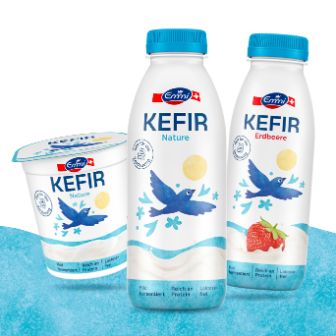
1. Dairy contributes to a healthy diet
Dairy has a high nutritional value and high nutrient density. It provides high-quality protein with all nine essential amino acids, important micronutrients such as vitamins D, B2 and B12, as well as minerals such as calcium and phosphorus that are vital for maintaining vital body functions. Milk and dairy products are not just made up of individual nutrients; they have a complex structure consisting of fat, protein, and minerals – known as the milk matrix. This helps the body absorb and utilize the nutrients more effectively.
Many people do not meet the recommended daily intake of nutrients. For example, 66% of the world’s population does not meet the recommended daily intake of calcium and half of 65-75-year-olds in Switzerland do not meet the minimum requisite protein intake. This is why nutritionists and dieticians in 42 countries recommend consuming dairy products on a daily basis, to benefit muscles, bones and the cardiovascular system, among other things. In Switzerland, for example, two to three servings of dairy products a day are recommended. Actual consumption is lower.
2. Dairy is versatile and offers a high level of food safety
Dairy is a versatile natural product, ranging from milk-based drinks to fermented products like cheese and yogurt, as well as desserts and much more. The raw material facilitates consistent new product innovations in response to the constantly changing needs of consumers, such as meal replacements and dairy products with functional benefits. The dairy shelf is a focal point for many nutritional trends. Processed milk that retains its positive properties not only has a longer shelf life but also fulfils Emmi’s high standards of product quality and food safety.
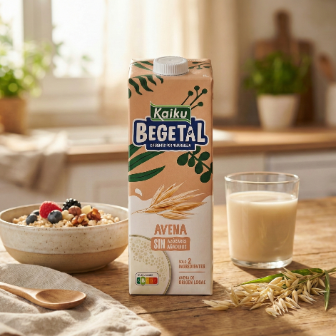
3. Emmi also offers alternatives
In addition to cow’s dairy products, the Emmi Group also offers products made from sheep’s and goat’s milk, as well as plant-based alternatives. These primarily include beverages and yogurt alternatives made from oats, almonds, soy, or rice, with Emmi ensuring a sustainable supply chain. With brands such as Beleaf and Kaiku Begetal, the company is specifically strengthening this segment. For example, Beleaf contains 100% Swiss oats to keep transport routes short and create added value for Swiss agriculture.
4. Dairy contributes to food security
Only ruminants, such as cows, have the ability to convert grass, which humans are unable to digest, into high-quality food that is a valuable source of protein. This is important because over two thirds of the world’s agricultural land is non-arable grassland. In Switzerland, grassland accounts for around 80% of agricultural land, in Chile 81% and in Brazil 60%.
In addition, the production of one kilogram of plant-based food generates four kilogrammes of by-products, most of which can only be converted back into food by ruminants. In contrast to carbon from fossil combustion processes, carbon from ruminants forms an ecological cycle in a site-adapted production system. In order to feed the world’s growing population, milk constitutes part of the solution to global food security. It also ensures the income and livelihood of around 240 million people around the world.
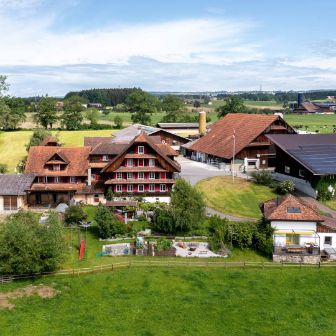
5. Emmi is focused on more sustainable dairy farming
As a manufacturer of dairy products, the Emmi Group assumes responsibility as a company – both today and for future generations. One of the goals of our sustainability strategy is to process 100% sustainable milk worldwide by 2027. All our Swiss milk suppliers in Switzerland already meet the requirements of the “Sustainable Swiss Milk” industry standard. Emmi has defined a criteria catalogue for all markets outside Switzerland in order to reach this target on an international level too. The Emmi Group purchases milk locally and works with its milk suppliers to ensure that all local production systems gradually become more sustainable.
6. Emmi will continue to reduce the carbon footprint of milk.
Emmi assesses environmental impacts holistically, taking into account a food product’s nutrient content as well. Due to its high nutrient density, dairy has a low environmental impact. Nonetheless, the company wants to continue reducing the impact of milk production on the environment and society. One flagship initiative is KlimaStaR Milk that Emmi launched together with other companies to further reduce the already low carbon footprint of Swiss milk. This pioneering project identifies key drivers for further reducing greenhouse gas emissions, for example, through optimised feeding.
The project also aims to reduce competition for both food and land – a crucial combination of objectives for long-term success. These fundamental findings are also passed on to the international subsidiaries, starting with the most important dairy markets. Brazilian and Chilean pilot plants, for example, have already collected their initial values. The most important levers have been recognised, and the corresponding measures are being planned – adapted to local conditions.
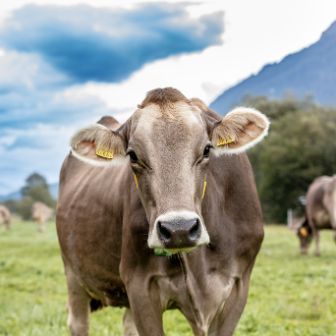
7. Emmi prioritises animal welfare
The leading players in milk production are the animals that make this natural product possible in the first place. Animal welfare is therefore of great importance to Emmi. Switzerland already has good framework conditions in place for this and has one of the strictest animal welfare laws in the world. In Switzerland, for example, 90% of cows are kept on pasture and 59% in free-stall barns. Emmi is also committed to animal welfare on an international level: all suppliers of goat’s milk to our Dutch subsidiary Emmi Bettine actively promote an animal welfare and environmental protection programme and achieve above-average results.
Through the Fondation Vitalait foundation, our Tunisian subsidiary offers new opportunities to dairy farmers and promotes sustainable milk production through practical initiatives in the areas of feeding, better animal welfare, and enhanced milk productivity and quality. 94% of the milk volume from our Chilean subsidiary Quillayes Surlat, for example, is certified with the animal welfare label Bienestar Animal. As the first company to implement this label, Quillayes Surlat plays a leading role in the dairy industry in South America.
Further information
> Download our fact-based fundamental position on dairy (PDF) including sources